The mistake many people make is waiting until they feel completely out of control before trying anything. By then, the body is already in full alarm mode.
A better approach is to respond early and simply. Sit down if you can. Drop your shoulders. Unclench your jaw. Breathe out slowly before you worry about taking a deep breath in.
The goal is not to become perfectly calm in thirty seconds. The goal is to stop the spike from building into a full wave.
That is often enough to make the next few minutes much easier to manage. Breathing exercises for stress, anxiety, and panic are widely used for exactly this reason, and NHS guidance notes that they can be done almost anywhere in just a few minutes.
What An Anxiety Spike Usually Feels Like
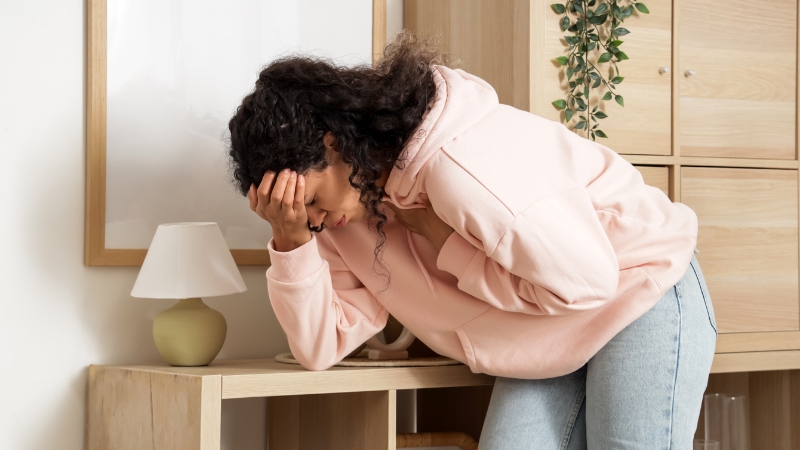
An anxiety spike can hit fast. Sometimes there is an obvious trigger, like a stressful message, a conflict, bad news, a crowded place, or a thought that suddenly spirals. Other times it seems to come out of nowhere.
The body may react as if there is immediate danger even when you know, logically, that you are safe. That is why anxiety can feel so confusing. Your thinking mind may understand one thing, while your nervous system acts like something terrible is happening.
For some people, the first sign is physical. Their breathing gets shallow. Their heart starts pounding. Their stomach turns. Their hands go cold or shaky. Others notice the mental side first: dread, urgency, catastrophic thoughts, or the sudden feeling that they need to escape.
NIMH describes anxiety disorders as involving frequent, intense fear or dread out of proportion to the situation, and panic attacks can include symptoms such as a racing heart, sweating, trembling, shortness of breath, chest pain, dizziness, and fear of losing control.
That does not mean every anxiety spike is a disorder. Plenty of people have acute moments of anxiety without having a formal diagnosis. But the way you calm it down is often similar. You work with the body first, then with attention, then with the thoughts if needed.
What To Do In The First Sixty Seconds
The first minute matters because anxiety feeds on momentum. If you add fear about the symptoms to the symptoms themselves, the spike usually gets stronger. So the first job is simple: slow the cycle.
Start by breathing out. Not with a huge dramatic breath, just a slow, deliberate exhale. Then let the next inhale come in gently through your nose.
NHS breathing guidance recommends a calm, regular rhythm that allows the breath to move in and out smoothly, rather than rapid upper chest breathing. Some panic guidance also emphasizes breathing out for longer than you breathe in, because that helps reduce the sense of alarm in the body.
At the same time, relax one visible part of your body. Drop your shoulders. Uncross your fingers. Loosen your tongue from the roof of your mouth.
Anxiety tightens the body fast, and that tension sends a message back to the brain that the threat is still active. A small physical release can begin to break that loop.
Then orient yourself. Look around the room. Notice where you are. Name three things you can see. Name one thing you can touch.
Grounding techniques are often recommended because they pull attention out of the spiral and back into the present moment, which can reduce the feeling of being swept away by panic.
The Fastest Techniques That Actually Help
Slow Breathing
This is the most reliable first move for many people. Not because breathing solves every form of anxiety, but because anxiety often changes breathing in a way that makes the rest of the symptoms worse.
Fast, shallow breathing can increase dizziness, chest discomfort, tingling, and the sense that you cannot get enough air. Controlled breathing helps reverse that pattern.
NHS guidance says calming breathing exercises can help with stress, anxiety, and panic in just a few minutes. Mayo Clinic also notes that focused breathing can lower stress and improve clarity even in a short burst.
A practical version is this: breathe in through your nose for a count of four, then breathe out for a count of six. Do not force a huge inhale. Keep it gentle. Repeat for one to three minutes. The longer exhale matters. It tends to feel safer, steadier, and less likely to make you dizzy than taking repeated deep breaths.
Grounding
View this post on Instagram
Grounding works best when your mind feels like it is running ahead of you. The point is not to “think positive.” The point is to reconnect with what is actually around you right now. Some people use the 5 to 4 to 3 to 2 to 1 method, naming things they can see, feel, hear, smell, and taste.
Others do better with something simpler, like pressing both feet into the floor and describing the room in plain language. NHS grounding advice includes focusing on breathing, posture, and immediate sensory details to reduce the intensity of anxious feelings.
The reason this helps is straightforward. Anxiety tries to drag your attention into imagined danger. Grounding pulls attention back into the current environment. That shift alone can lower the temperature of the moment.
A Short Reassuring Script
When anxiety spikes, your internal voice often becomes dramatic, absolute, and urgent. You do not need a perfect affirmation. You need one sentence that keeps things from escalating.
Something like: “This is anxiety. It feels strong, but it will pass.” Or: “My body is alarmed. I am safe enough right now.” The wording matters less than the message. It should be believable, short, and calm.
Panic guidance often starts with recognition and acceptance of what is happening instead of fighting the sensation as if it proves a catastrophe. That shift can reduce the secondary fear that keeps panic going.
Movement Without Chaos
Sometimes sitting still makes anxiety louder. In that case, do something physical but simple. Walk slowly around the room. Stretch your hands open and closed. Rinse your face with cool water.
Step outside for a minute if you can do so safely. Mayo Clinic’s stress management guidance includes movement, brief resets, and simple relaxation actions as fast ways to reduce stress arousal.
The key is not to turn it into frantic escape behavior. The goal is steady movement, not rushing.
What Usually Makes An Anxiety Spike Worse
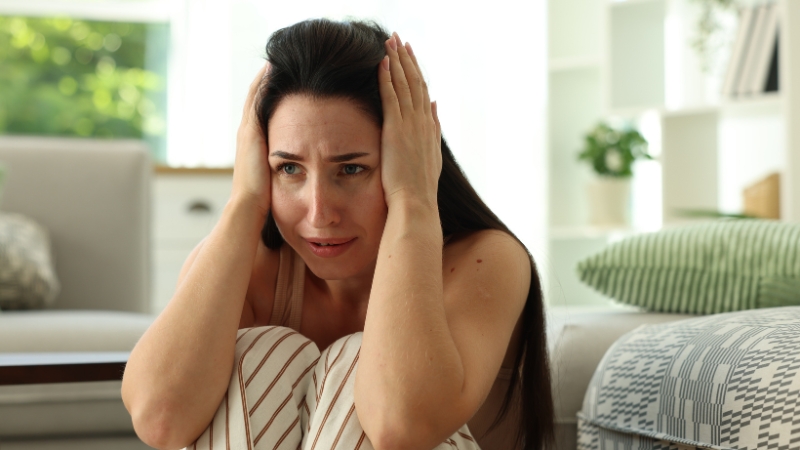
A lot of people accidentally intensify their own anxiety because the first reaction feels natural. They start checking every sensation. They try to “test” whether they can breathe normally.
They search for symptoms online in the middle of the spike. They pace fast. They gulp air. They start mentally jumping ten steps ahead into worst-case scenarios. All of that adds fuel.
One of the most common traps is overbreathing. People feel short of breath, so they take repeated big breaths. But when anxiety is already speeding up breathing, that can worsen lightheadedness and chest discomfort.
Controlled, slower breathing is usually more helpful than huge breaths. That is one reason NHS and panic resources focus on calm breathing patterns rather than aggressive deep breathing.
Another problem is trying to eliminate the feeling immediately. That creates pressure. And pressure can make anxiety stronger. You do not need to force calm. You are trying to reduce the spike enough that you can function again.
A Practical Reset You Can Use Anywhere
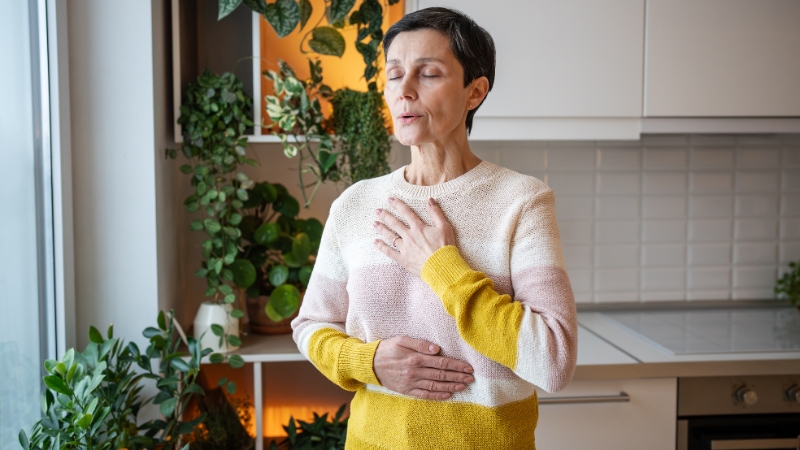
Here is a fast sequence that works well in everyday situations such as work, travel, social settings, or at home:
Step One
Pause and stop multitasking. Sit or stand still for a moment.
Step Two
Exhale slowly through your mouth.
Step Three
Breathe in through your nose for four seconds.
Step Four
Breathe out for six seconds.
Step Five
Repeat that five times.
Step Six
Name five things you can see.
Step Seven
Press both feet into the floor and relax your shoulders.
Step Eight
Say one steady sentence to yourself: “This is uncomfortable, not dangerous.”
This kind of sequence blends the main evidence-based self-help elements commonly recommended in anxiety and panic guidance: controlled breathing, grounding, and brief cognitive reframing.
When Anxiety Spikes In Public
@rossrolph If a busy place spikes your anxiety, don’t escape. Let the wave be there and take one normal step anyway. That’s how your brain relearns “I’m safe.” Comment EBOOK and I’ll send you my Anxiety Relief Roadmap 💛 #anxiety #panicattack #anxietyrelief #mentalhealth #exposuretherapy ♬ الصوت الأصلي – 𝑆𝐴𝐿𝐼𝑀❤️🩹🎵
Public anxiety feels worse partly because embarrassment joins the fear. Now you are not only anxious. You are anxious about being seen as anxious. That second layer makes the experience feel sharper and more urgent.
The best response is usually smaller and less visible than people think. You do not need to leave instantly unless you truly need to. You can slow your breathing while looking at your phone. You can ground yourself by noticing objects around you.
You can unclench your hands under a table. You can take a slow walk to the restroom and reset there. The point is to reduce the spike without convincing your brain that every public place is dangerous.
If you leave every time the feeling rises, anxiety sometimes learns that escape is the only safety. If you stay just a little longer while calming your body, your nervous system can start learning a different lesson.
What To Do After The Spike Passes
Once the worst of it passes, do not immediately start interrogating yourself. You do not need a courtroom review of every thought. First, let your system settle. Drink some water. Sit quietly for a few minutes. Ease back into what you were doing instead of demanding instant normality.
Later, when you are calm enough, look for patterns. Was there a trigger? Too much caffeine. Poor sleep. Hunger. An overload of stress. A crowded environment. A specific worry you have been avoiding.
NIMH notes that anxiety can become more intense around stress, major life events, and other pressures. Recognizing patterns does not solve everything, but it gives you leverage.
This is also where prevention starts to matter. The more run-down your body is, the easier it is for anxiety to spike. Sleep, caffeine habits, alcohol use, exercise, and general stress load all influence how reactive your system feels.
When It Is Time To Get Extra Help
Occasional anxiety spikes are common. Repeated spikes that interfere with work, travel, relationships, sleep, or daily functioning deserve more attention. If you are avoiding places, constantly fearing the next episode, or finding that self-help only partly works, it may be time to speak with a doctor or mental health professional.
NIMH says anxiety disorders are treatable, commonly with psychotherapy, medication, or both, depending on the situation.
It is also important to use judgment about physical symptoms. Chest pain, fainting, new severe shortness of breath, or symptoms that feel very different from your usual anxiety should not be automatically dismissed. If something seems medically urgent, treat it as urgent.
The Bottom Line
When anxiety spikes, the fastest useful response is usually physical first and mental second. Slow the breath. Make the exhale longer. Ground yourself in what is around you. Relax visible tension.
Use one calm sentence instead of ten frantic ones. These techniques do not erase anxiety forever, but they can lower the intensity quickly and stop the moment from snowballing.
That is what makes them practical. And when spikes become frequent or disruptive, getting proper help is not a failure of coping. It is the next smart step.