
We live in an era of unprecedented convenience, yet many of us feel a persistent, quiet friction wearing down our daily lives. From the outside, you manage a demanding schedule with the precision of an air traffic controller. You eat at premium restaurants, shop at organic grocery stores, and grab cold-pressed juices between meetings. Your life is filled with high-quality fuel. Yet, by three in the afternoon, a heavy, stubborn fog rolls in. Your focus blurs, and you find yourself reaching for a second double espresso just to stay afloat.
When this fatigue sets in, our instinct is to treat our bodies with a sort of cold, mechanical impatience. We assume we simply need more energy, so we consume more calories. But this approach entirely misdiagnoses the issue. You do not have a lack of willpower, and you are certainly not running low on raw fuel. You are experiencing the paradox of the modern palate: you are overfed, but your cells are starving.
The Illusion of “Healthy” Calories

To understand how we became so metabolously depleted in a world of abundance, we have to look past the marketing terms on our food packaging. Traditional nutrition has taught us to view food through a sterile, mathematical lens: calories in versus calories out. But the human body is not a simple furnace. It is a highly complex, gossiping network of hormones and chemical signals. Food is not just thermal fuel. It is biological data.
Every molecule we ingest behaves like an instruction manual, telling our genes which proteins to synthesize, our hormones when to release, and our mitochondria, the tiny power plants inside our cells, how to produce energy.
When we rely on convenient, highly processed grab-and-go options, even those labeled “organic,” “gluten-free,” or “natural”, we are often consuming empty data. These foods are engineered to be highly shelf-stable and hyper-palatable, but they have been stripped of the vital micronutrients, trace minerals, and enzymes that our cellular machinery requires to run. You may feel physically full, but at a cellular level, your mitochondria are running on empty. This disconnect is what leaves so many busy adults feeling simultaneously heavy and exhausted.
The Cellular Starvation Cycle
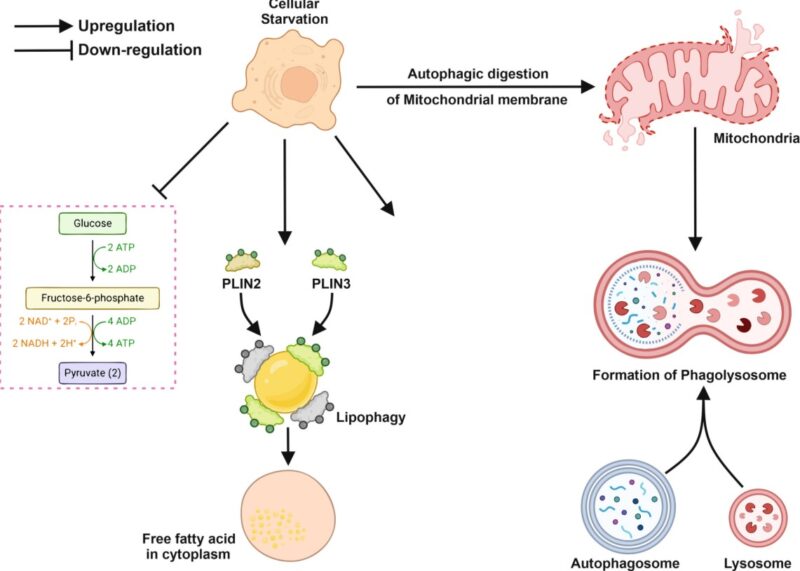
What happens when your cells are consistently starved of these vital instructions? The body goes into a quiet survival mode.
When we consume rapidly digesting, low-micronutrient carbohydrates on a busy workday, we send a sudden flood of glucose into the bloodstream. In our youth, our pancreas could easily manage these dramatic spikes. But over time, our cells naturally become somewhat less receptive to the signals. Instead of escorting that sugar into our muscles to be burned as clean energy, the body struggles to process the spike.
This is the silent origin of the afternoon crash. It is not a design flaw of aging; it is the physical friction of cellular starvation.
Low-Micronutrient Meal —> Sudden Glucose Spike —> Rapid Insulin Surge —> Energy Crash & Cravings
Because your cells didn’t actually receive the trace minerals and micronutrients they needed to build energy, they continue to signal hunger. You find yourself pacing the kitchen or staring into the office fridge just ninety minutes after a large meal, searching for another quick burst of fuel. It is a vicious, exhausting loop: we eat to cure our fatigue, yet the food we choose only deepens the cellular depletion.
Rather than accepting this constant, underlying exhaustion as an inevitable consequence of a busy life, transitioning to a smarter approach to everyday wellness allows us to work directly with our biology. It means shifting our focus away from mere caloric volume and toward cellular density, ensuring that every bite we take actually delivers the biological data our mitochondria need to thrive.
Shifting from Volume to Density

Reclaiming your cognitive clarity and daily stamina does not require a restrictive diet or a monastic lifestyle. It simply requires you to change the objective of your meals. The goal is to maximize the nutrient-to-calorie ratio of what you eat.
- Buffer your energy: Stop eating carbohydrates in isolation. When you pair a complex carbohydrate with a high-quality protein and a healthy fat, you slow down the rate of digestion. The glucose is released into your bloodstream not as a sudden, destabilizing wave, but as a slow, metered trickle.
- Prioritize the unsung heroes: Your mitochondria require a highly specific cocktail of micronutrients to convert food into energy. This includes magnesium, B vitamins, coenzyme Q10, and zinc. These aren’t found in processed energy bars; they are found in whole, dark leafy greens, pasture-raised eggs, wild-caught fish, and raw pumpkin seeds.
- Respect your nervous system: If you eat while answering urgent emails, scrolling through your phone, or driving, your body is in a state of mild fight-or-flight. In this sympathetic state, blood flow is diverted away from your digestive tract, meaning you cannot properly absorb the nutrients in your food, no matter how healthy the meal is.
Ultimately, the transition we need to make as busy adults is one of perspective. Our bodies do not need to be forced, restricted, or punished. They simply need to be heard. When we stop treating food as a quick fix for fatigue and start treating it as the foundation for our daily cellular health, we find that our energy ceases to be a constant struggle. We don’t have to force the body to perform; we simply have to give it the quiet space and the right data, to thrive.