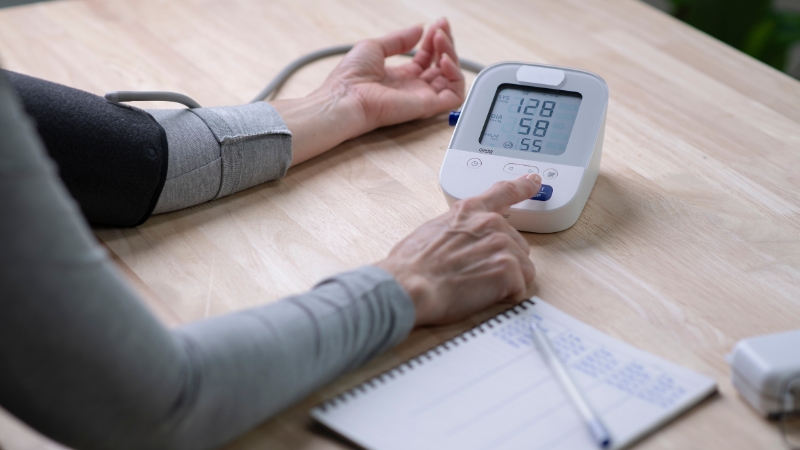
Blood pressure looks simple because it is written as just two numbers, but those numbers carry a lot of information. A reading like 118/76 mmHg usually means blood is moving through the arteries with a healthy amount of force.
A reading like 138/86 does not mean immediate danger, but if it keeps showing up, it starts to matter because long-term elevation raises the risk of heart attack, stroke, kidney disease, heart failure, and damage to blood vessels. That is why blood pressure is treated as both a daily measurement and a long-range risk marker.
High blood pressure is common, often silent, and often missed until it has already been present for years. In the United States, 47.7% of adults had hypertension in 2021–2023, and prevalence rose sharply with age, reaching 71.6% among adults 60 and older. Globally, about 1.4 billion adults aged 30–79 have hypertension.
What The Two Numbers Actually Mean
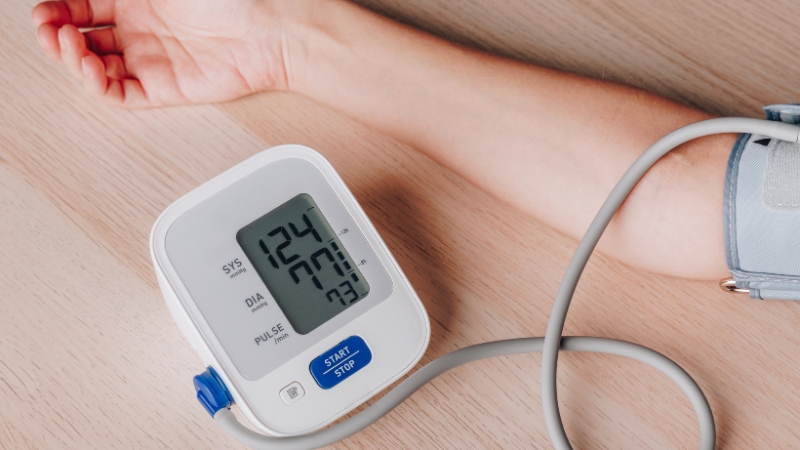
Here is the simplest way to read a blood pressure result:
Part of the reading
What it means
Example
Systolic
Pressure in the arteries when the heart beats
120 in 120/80
Diastolic
Pressure in the arteries while the heart rests between beats
80 in 120/80
Systolic pressure usually gets more attention because it becomes a stronger marker of cardiovascular risk as people age, especially once arteries stiffen.
Diastolic pressure still matters, especially in younger adults and in cases where the bottom number stays high even if the top number looks less dramatic.
The number is written in mmHg, which means millimeters of mercury, an old measurement unit that remains the standard for blood pressure.
Blood Pressure Categories In Plain English
The most widely used U.S. categories come from the ACC/AHA guideline and the AHA patient guidance:
Category
Systolic
Diastolic
What it means in plain terms
Normal
Less than 120
and less than 80
Healthy range for most adults
Elevated
120 to 129
and less than 80
Not hypertension yet, but moving upward
Hypertension Stage 1
130 to 139
or 80 to 89
Mildly high, worth attention and follow-up
Hypertension Stage 2
140 or higher
or 90 or higher
Clearly, high treatment is often needed
Hypertensive crisis
Higher than 180
and or higher than 120
Recheck after 5 minutes; urgent action may be needed
A very important detail is the word or. If one number is in a higher category, the whole reading is treated in that higher category. So 128/82 counts as Stage 1 because the bottom number is already in the hypertension range.
Likewise, 142/78 counts as Stage 2 because the top number is in that range.
What A Normal Reading Usually Looks Like
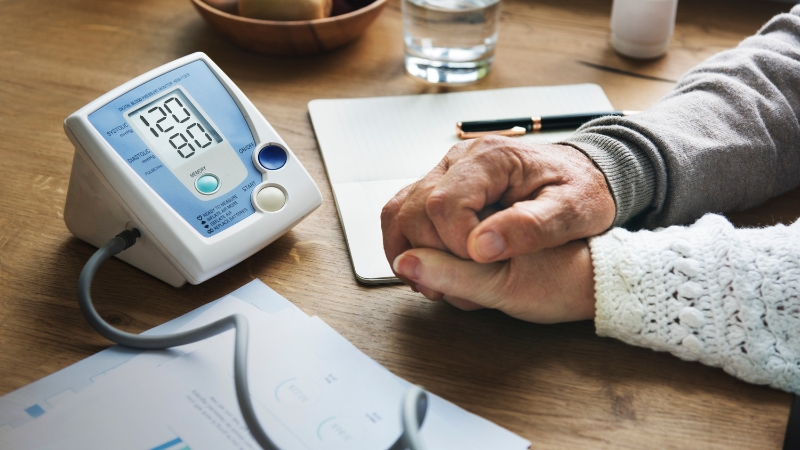
For most adults, a reading below 120/80 is considered normal. Cleveland Clinic and the AHA both use this benchmark for most adults.
That does not mean every person with a reading a little above that is sick, and it does not mean every person with a reading below that is automatically healthy in every other sense. It means that, as a blood pressure target, that range is associated with lower cardiovascular risk.
Examples that would usually be seen as normal:
Reading
Simple interpretation
108/68
Normal
114/74
Normal
118/78
Normal
A lot of healthy adults sit in this range without thinking about it. Younger adults, learner adults, and people who exercise regularly often trend lower. Some people naturally run a little low and feel completely fine.
When “A Little High” Starts To Matter
The confusing part for many people is that mildly high readings do not usually cause symptoms. Someone can feel perfectly normal with 132/84 or 138/88. That is exactly why hypertension is so often called a silent problem.
NHLBI notes that high blood pressure usually has no signs or symptoms, and the CDC points out that about 1 in 5 adults with high blood pressure is unaware of it.
Here is how common readings usually get interpreted in real life:
Reading
Category
What it usually means
121/78
Elevated
Not hypertension, but not ideal
128/79
Elevated
Still below the hypertension threshold
131/82
Stage 1
Mild hypertension range
136/86
Stage 1
Consistently high enough to matter
145/92
Stage 2
Clearly high
182/121
Crisis range
Needs immediate repeat check and urgent guidance
This is where repetition matters. One reading after stress, poor sleep, a workout, nicotine, or a large coffee is not the full story. A week of readings that keep landing in the same range is much more meaningful.
Why Doctors Care About Repeated High Readings
Blood pressure is not just a number. It is a force applied to blood vessel walls all day, every day. When that force stays too high over time, arteries remodel and stiffen, the heart has to pump against more resistance, and organs with delicate microcirculation, such as the kidneys, brain, and eyes, can slowly take damage.
This is why treatment decisions are based not only on the number itself but also on total cardiovascular risk. Major guidelines now place strong emphasis on repeated measurements, out-of-office confirmation, and overall risk rather than reacting to one isolated office reading.
One of the major outcome trials here is SPRINT. In adults aged 50 and older with hypertension and increased cardiovascular risk, but without diabetes or prior stroke, aiming for a systolic blood pressure target below 120 mmHg reduced major cardiovascular events and lowered death risk compared with a target below 140 mmHg.
NHLBI summarizes this as a 25% reduction in cardiovascular complications with more intensive control, and the original trial in NEJM found lower rates of major events and death in the intensive-treatment group.
That does not mean everyone should chase the lowest number possible on their own. It means blood pressure control matters because outcome data show it changes what happens to people over time.
Low Blood Pressure Is Different
Most attention goes to high blood pressure, but low blood pressure can matter too. A reading below 90/60 is often used as a practical cutoff for hypotension, but context matters more than the number alone.
Some people live around 92/58 and feel completely normal. Others feel weak, dizzy, or faint at higher numbers if the drop is sudden or if they are dehydrated, ill, bleeding, or taking medications that lower pressure.
Cleveland Clinic notes that blood pressure that is too low can also create problems, even though a lower reading is not automatically dangerous.
A practical way to think about low readings:
Reading
Possible meaning
98/64
Often fine if no symptoms
92/58
Maybe normal for some people
86/54
May cause symptoms in some adults
Below 80/50
More concerning, especially with dizziness, confusion, weakness, or fainting
The real question with low pressure is whether enough blood is reaching the brain and organs.
Why Home Readings Often Matter More Than A Single Clinic Reading
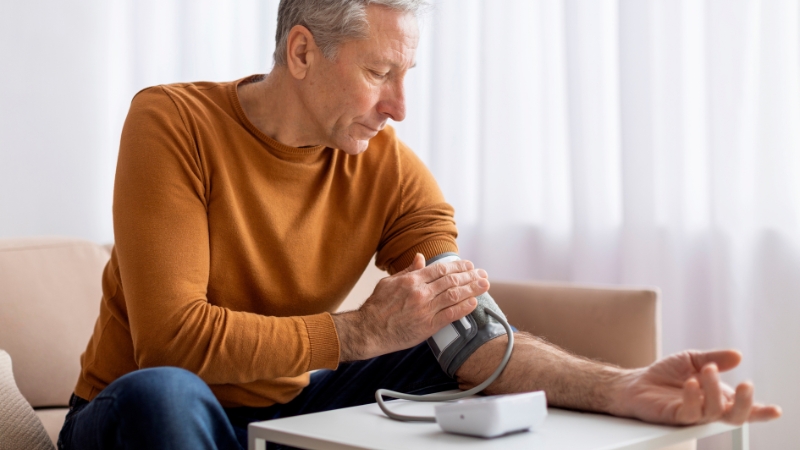
A major modern shift in blood pressure care is that diagnosis should not rely only on what happens in the clinic. The USPSTF recommends office screening, but also recommends confirming the diagnosis outside the clinic before starting treatment.
NICE similarly uses 140/90 mmHg in clinic and 135/85 mmHg for home blood pressure monitoring as important thresholds for diagnosis.
That is because two common patterns exist:
Pattern
What it means
White coat hypertension
Blood pressure is high in the clinic but lower at home
Masked hypertension
Blood pressure looks okay in the clinic, but is high at home
Masked hypertension is especially important because it can create false reassurance. NICE explicitly notes that clinic measurements can be normal while out-of-office readings are higher.
How To Take A Reading Correctly
Bad technique can easily distort the result. The AHA says the wrong cuff size can cause inaccurate readings, and measurement guidance emphasizes correct cuff sizing, posture, rest, and repeated measurements.
Preliminary research highlighted by the AHA found that using a cuff that was too small falsely raised readings in 39% of participants, while using one too large missed 22% of people who actually had hypertension.
For a more accurate reading:
Step
What to do
Rest first
Sit quietly for 5 minutes
Position
Back supported, feet flat, legs uncrossed
Arm
Supported at the heart level
Cuff
Use the correct size
Avoid before measuring
Caffeine, smoking, and exercise for at least 30 minutes if possible
During the reading
Do not talk
Repeat
Take 2 readings and average them if instructed
These details sound minor, but they are not minor. A rushed reading after climbing stairs and sitting down for 20 seconds can look very different from a properly measured resting reading.
Common Numbers People Ask About
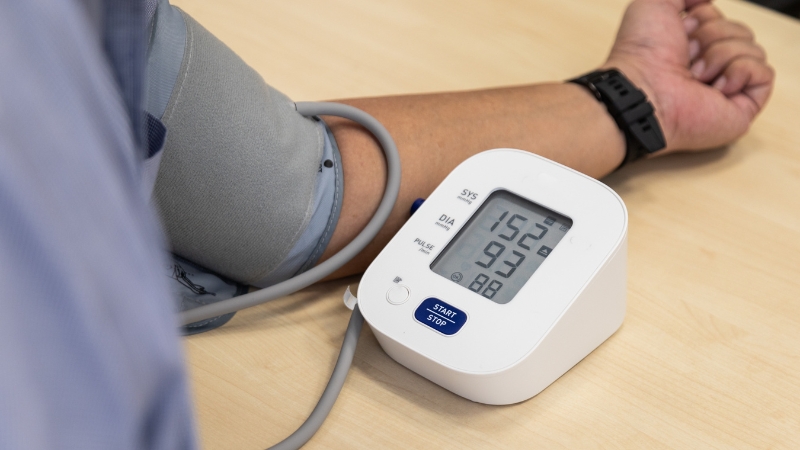
Here is a simple cheat sheet for common readings:
Reading
Likely interpretation
117/76
Normal
124/78
Elevated
129/79
Elevated, close watch makes sense
130/80
Stage 1 hypertension threshold
135/85
High at home-monitoring threshold in some guidance
140/90
Classic office hypertension threshold in many systems
150/95
Definitely high
160/100
More serious hypertension
180/120
Crisis threshold, especially if repeated
This table is useful, but it still does not replace context. A fit 28-year-old with one isolated 132/81 after a bad sleep is different from a 62-year-old with diabetes whose readings are 132/81 all week.
What High Blood Pressure Does Over Time
Uncontrolled hypertension raises the risk of:
Organ system
What can happen
Heart
Heart attack, heart failure, left ventricular hypertrophy
Brain
Stroke, vascular cognitive decline
Kidneys
Chronic kidney disease
Eyes
Retinal blood vessel damage
Arteries
Atherosclerosis and aneurysm risk increase
This is the reason blood pressure is taken so seriously, even when the person feels fine. The damage is often gradual rather than dramatic at first. WHO describes hypertension as a major driver of stroke, heart attack, heart failure, kidney damage, and premature death.
The Scale Of The Problem
The numbers are large enough that blood pressure is not a niche health issue. It is one of the central public-health problems in adult medicine.
Statistic
Value
U.S. adult hypertension prevalence, 2021–2023
47.7%
Men with hypertension, 2021–2023
50.8%
Women with hypertension, 2021–2023
44.6%
Adults 18–39 with hypertension
23.4%
Adults 40–59 with hypertension
52.5%
Adults 60+ with hypertension
71.6%
Global adults 30–79 with hypertension
About 1.3 billion
Adults with hypertension globally who have it under control
About 21% according to WHO data summarized in recent literature
Those statistics explain why guidelines now push routine screening, home monitoring, and earlier attention to patterns rather than waiting for obviously severe numbers.
When A Reading Needs Urgent Action
View this post on Instagram
A blood pressure reading is not always an emergency, but some readings should never be shrugged off. NHLBI advises that if your reading is 180/120 mmHg or higher, you should wait 5 minutes and check again.
If it is still that high, contact a healthcare professional immediately, and if it is paired with symptoms such as chest pain, shortness of breath, weakness, trouble speaking, severe headache, vision changes, or confusion, emergency care is warranted.
A practical guide:
Situation
What to do
One mildly high reading
Recheck later, do not panic
Several days of readings above normal
Track and discuss with a clinician
Repeated readings around 140/90 or higher
Medical evaluation is appropriate
180/120 or higher without symptoms
Repeat after 5 minutes and seek urgent medical advice
180/120 or higher with symptoms
Emergency care
What Research Supports The Most
The strongest takeaways from guidelines and studies are straightforward.
First, high blood pressure usually causes no symptoms, so waiting until you feel bad is not a safe strategy.
Second, out-of-office confirmation matters. The USPSTF recommends confirming elevated office readings with home or ambulatory monitoring before diagnosing hypertension.
Third, the measurement technique changes the result. Wrong cuff size, poor posture, talking, stress, and lack of rest can all meaningfully distort the reading.
Fourth, bringing blood pressure down reduces hard outcomes. SPRINT is one of the clearest examples that better control lowers major cardiovascular events and mortality in the right patients.
Bottom Line
@aprokodoctorThose numbers on your BP machine, do you know what they mean? Watch and learn!
A blood pressure reading is a snapshot of how hard your circulatory system is working at that moment. The top number shows pressure when the heart beats. The bottom number shows pressure when the heart rests.
Below 120/80 is normal for most adults. 120 to 129, with a bottom number under 80, is elevated. 130/80 or above enters hypertension territory in U.S. guidance, and 140/90 or above remains a major threshold in many international and office-based systems.
A reading only becomes meaningful when you look at the pattern, the setting, the symptoms, and the person’s overall cardiovascular risk.