
Most adults do not need a magic number like “exactly 8 glasses” every single day. The most concrete evidence-based baseline is this: adult women generally need about 2.7 liters of total water per day, and adult men about 3.7 liters of total water per day.
That is total water, not just plain drinking water. It includes water from beverages and from food. In practice, that usually works out to roughly 11.5 cups a day for women and 15.5 cups a day for men from all sources combined.
That does not mean every person should force down those exact amounts daily. Needs change with heat, body size, physical activity, illness, pregnancy, breastfeeding, and how much fluid you lose through sweat, diarrhea, or vomiting.
That is why public health advice also uses a simpler everyday guide: many people should aim for about 6 to 8 cups or glasses of fluid a day as a starting point, then drink more if conditions increase fluid needs.
The Number Most People Misunderstand
The biggest confusion is the difference between total water and plain drinking water. The higher numbers, 2.7 liters for women and 3.7 liters for men, include everything: plain water, tea, coffee, milk, other drinks, and the water inside foods like fruit, yogurt, soups, and vegetables.
The National Academies and Mayo Clinic both present these figures as total daily fluid or water intake, not as a demand to drink that entire amount as plain water alone.
That means a person who drinks water, has coffee in the morning, eats fruit, and has soup or high-water foods during the day is already getting part of their hydration without thinking about it.
The old “8 glasses” rule is easy to remember, but it is too blunt to reflect how hydration actually works in real life.
A Practical Daily Range For Most Adults
If you want concrete, usable numbers instead of vague advice, this is the best simple framework:
Person
Total Water Per Day
Rough Cup Equivalent
What That Means In Real Life
Adult women
2.7 liters
11.5 cups
Includes drinks and food
Adult men
3.7 liters
15.5 cups
Includes drinks and food
Many adults as a simple fluid goal
1.5 to 2.0 liters minimum fluid, often 6 to 8 cups as a baseline
6 to 8 cups
A starting point, not a hard ceiling
The two rows are not contradictory. The first is the broader total water target. The second is the simpler minimum fluid intake guide that many health services use for day-to-day advice.
So, How Much Plain Water Should You Actually Drink?
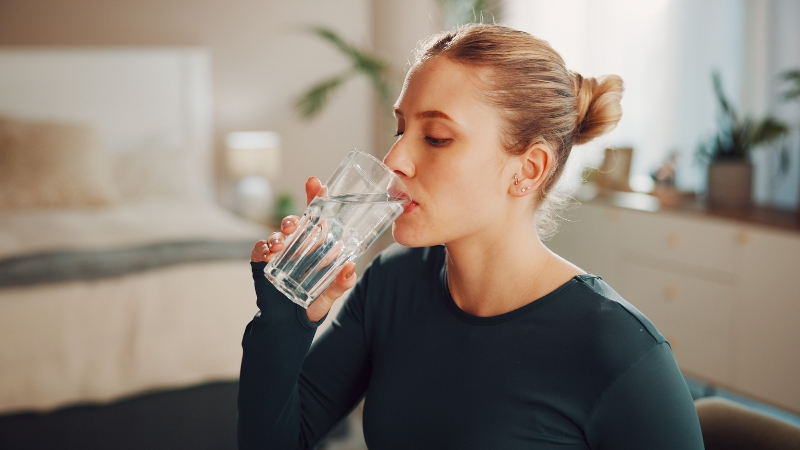
For many healthy adults, a useful working target is that a large share of daily fluids should come from plain water, but not necessarily all of it. Mayo Clinic notes that many people can stay adequately hydrated simply by drinking when thirsty and having beverages regularly throughout the day.
A Mayo Clinic community guidance piece also points to about 9 cups of water for women and 13 cups for men as a practical target for plain water within the broader total fluid recommendation, though this is more of a practical habit target than a universal rule.
In practical terms, that means many adults do well when they spread intake across the day instead of trying to drink a huge amount all at once.
A glass with each meal, one between meals, and extra around exercise or heat often gets people close without turning hydration into a chore.
When You Need More Than The Baseline
The baseline numbers apply to healthy, mostly sedentary adults in moderate climates. You need more when fluid losses rise or demand increases.
The NHS notes you may need more fluids if you are pregnant, breastfeeding, physically active for long periods, in a hot environment, ill, or recovering from illness.
The National Academies also notes that temporary underconsumption becomes more likely with heat exposure, high activity, and reduced food or fluid intake.
That means your water target on a cool office day is not the same as your target during:
Those are the moments when fixed “8 glasses” advice falls apart. Your body can lose fluid much faster than usual, and replacement needs go up.
Signs You Are Probably Drinking Enough
The NHS gives one of the most practical markers: your urine should usually be a clear, pale yellow color. If you are rarely thirsty and your urine is light yellow, your intake is often in a reasonable range.
Dark urine, infrequent urination, dizziness, or a dry mouth suggest you may be falling short.
Sign
Usually Reassuring
May Mean You Need More Fluids
Urine color
Pale yellow
Dark yellow
Thirst
Not frequent
Ongoing or strong thirst
Energy
Normal
Fatigue, sluggishness
Urination
Regular
Less often than usual
Mouth
Comfortable
Dry mouth or dry lips
This kind of self-check is more useful day to day than obsessing over an exact number of glasses.
Does Coffee And Tea Count?
View this post on Instagram
Yes. For most adults, coffee and tea do contribute to daily fluid intake. They are not “negative hydration.”
The main point from the NHS and Mayo style hydration guidance is that total fluid count from multiple beverages, not only plain water.
Water is still the best default drink because it hydrates without added sugar or calories, but caffeine-containing drinks still contribute to your total intake in normal amounts.
What matters more is the overall pattern. If most of your intake is sugar-sweetened beverages, that is a separate health issue. CDC advises choosing water over sugary drinks as the healthiest default.
Why The 8-Glasses Rule Is Not Totally Wrong, But Not Enough
The reason “8 glasses” survived so long is that it is simple, and for many adults, it is not a terrible starting point.
NHS guidance still uses 6 to 8 glasses as a practical daily goal. But the problem is that it sounds like a universal finish line when it is really just a baseline reminder.
A tall, active man in hot weather may need much more. A smaller sedentary adult in cool weather may be fine around that range, especially once food and other beverages are counted.
When Too Much Water Can Also Be A Problem
More is not always better. Drinking extreme amounts of water in a short time can dilute sodium levels and become dangerous, especially during endurance events or when people force fluids far beyond thirst and sweat loss.
That is not a common day-to-day problem for most adults, but it is one reason hydration advice should be based on real needs, not on aggressive water challenges.
The safest approach is steady intake across the day, plus extra when conditions genuinely increase in need. This caution is consistent with the National Academies’ focus on balanced intake rather than rigid overdrinking.
A Concrete Way To Apply This Daily
If you want a realistic answer you can actually use, this works well for most adults:
Start with 6 to 8 cups of fluids a day as a minimum habit target. Then remember that many healthy adults end up needing around 2.7 liters total per day for women or 3.7 liters total per day for men once food and all beverages are counted.
Increase intake on hot days, workout days, sick days, and during pregnancy or breastfeeding. Use urine color, thirst, and how often you pee as your practical checks.
The Bottom Line
@adampfauHow much water should you be drinking per day? While the general recommendation I give is at LEAST half your body weight in ounces per day, a good way to tell if you’re drinking enough is by simply looking at your urine. If your pee is clear like water, you might be peeing out some electrolytes and are likely drinking too much water. You can scale back a bit. If your pee is dark like apple juice, you’re likely dehydrated and should drink more water. If your pee has a hint of yellow, you are likely perfectly hydrated and should keep doing what you’re doing. If your pee has red in it, seek medical attention.♬ original sound – adampfau
The most concrete answer is this: most adult women need about 2.7 liters a day and most adult men about 3.7 liters a day of total water, including drinks and food.
If you want a simpler daily habit, 6 to 8 cups of fluids is a reasonable starting point, but it is not enough for everyone in every situation.
Your real need goes up with heat, exercise, illness, pregnancy, and breastfeeding. The best everyday check is not a rigid glass count.
It is whether you are drinking regularly, not feeling unusually thirsty, and producing pale yellow urine most of the time.