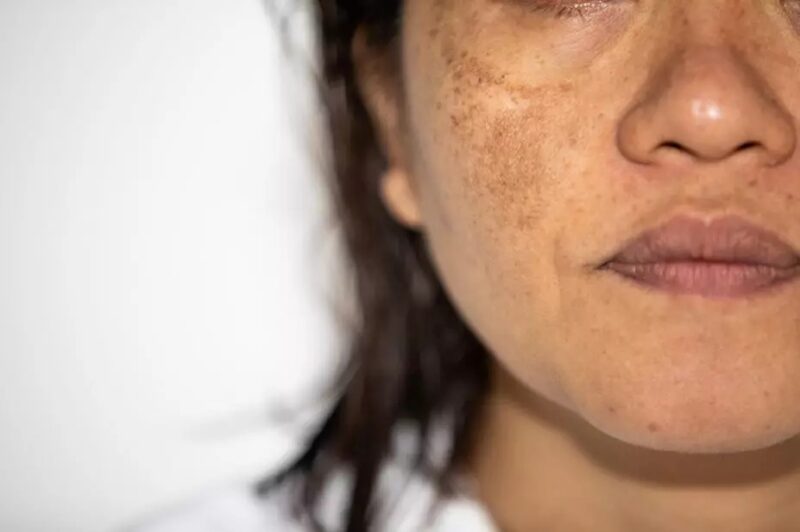
Dark spots after acne usually last months, not days. In most cases, these marks are post-inflammatory hyperpigmentation, not true scars. That means they can fade on their own, but the timeline is slow.
The American Academy of Dermatology says some acne-related dark spots can last a year or longer, while spots that are only a few shades darker than your natural skin tone often fade within 6 to 12 months. Deeper discoloration can take years to improve.
That is the first thing worth getting clear, because many people use the word “scar” for every mark acne leaves behind. Dermatology sources separate these problems into two groups.
Flat dark marks are usually pigment changes left by inflammation. Indented or raised changes in skin texture are acne scars, and those do not usually disappear on their own, the way pigment marks can.
So the real answer is this: if the mark is flat and only darker than the surrounding skin, it will often fade gradually, but you may be waiting several months to over a year. If the mark is depressed, raised, or feels texturally different, you are likely dealing with a scar rather than a dark spot, and the timeline is very different
What These Dark Spots Actually Are

Most dark marks left after a breakout are called post-inflammatory hyperpigmentation, often shortened to PIH. Cleveland Clinic describes hyperpigmentation as areas of skin that become darker because of excess pigment, and the AAD specifically notes that flat pigmented spots after acne are often PIH rather than scars.
This happens because acne creates inflammation. Once the pimple heals, the skin sometimes produces extra pigment in that exact spot.
The acne is gone, but the color stays behind. That is why someone can feel like their acne “never clears” even when the active breakouts are already healing. The remaining problem is not always new acne. Sometimes it is leftover discoloration from older inflammation.
How Long They Usually Last
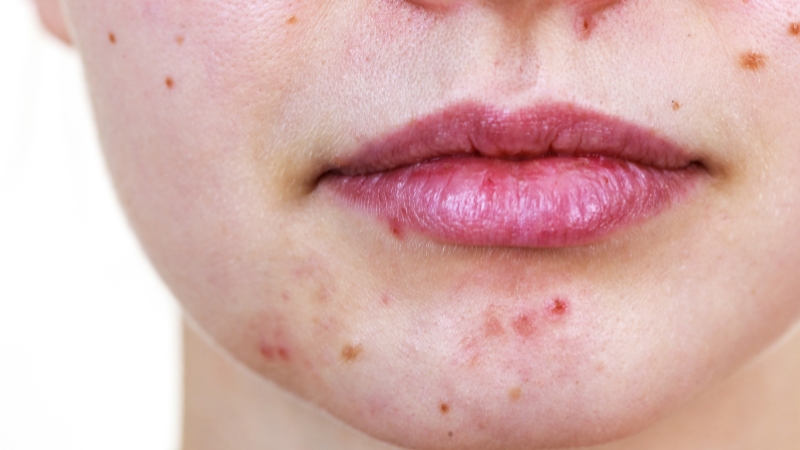
There is no single universal number, because fading depends on how deep the pigment sits, how dark the spot is, whether you keep getting new breakouts, and how much sun exposure the skin gets. But the broad timing is fairly consistent across reputable sources.
The AAD says many spots fade within 6 to 12 months if they are only somewhat darker than your normal skin tone, while other acne dark spots can remain visible for a year or longer. Marks that lie deeper in the skin can take much longer.
In practical terms, that means a fresh post-acne mark may still be visible long after the pimple is gone, even if nothing is “wrong.”
People often expect improvement in a few weeks and get frustrated when the pigment barely changes. That slow pace is normal. Skin color changes tend to resolve much more slowly than the breakout that caused them.
General Timeline Table
Type of mark after acne
What it usually means
Typical course
Flat brown, tan, or dark mark
Post-inflammatory hyperpigmentation
Often fades over months; many improve in 6 to 12 months
Very dark or deeper blue-gray discoloration
Deeper pigment in the skin
It can take much longer, sometimes years
Red or pink mark after acne
Post-inflammatory erythema rather than pigment
May gradually fade, but timing varies
Indented or raised mark
True acne scar
Usually, it does not fully fade on its own
The reason this table matters is that people often lump all post-acne marks together and expect the same recovery pattern from all of them. That leads to bad decisions, such as overusing harsh products on something that simply needs time and sun protection, or ignoring a real scar that may need professional treatment.
Why Some Dark Spots Last Much Longer Than Others
The depth of pigment is one of the biggest factors. According to the AAD, discoloration that sits deeper in the skin can last far longer than marks closer to the surface. Deeper pigment may look slate blue, gray, or much darker brown, and those marks tend to fade more slowly.
Sun exposure is another major reason dark spots linger. Mayo Clinic notes that sun exposure can worsen post-inflammatory hyperpigmentation and make dark marks linger longer.
This is why a person can be using acne products consistently and still feel as if the marks are stuck. If the skin is getting unprotected sun exposure, the contrast often stays stronger for longer.
Skin tone also affects how visible and persistent these marks can be.
The AAD’s guidance on dark spots in darker skin tones notes that fading can take time and that deeper discoloration can last much longer. This does not mean darker skin is unhealthy.
It means pigment-producing cells often respond more strongly to inflammation, so acne can leave a more noticeable mark behind.
Another big factor is ongoing inflammation. If you keep getting new breakouts in the same areas, your skin never really gets a chance to settle.
Each new pimple can leave another mark. That creates the impression that the same spots are not fading, when in reality, old marks may be fading slowly while new ones keep replacing them.
Dark Spots Versus Acne Scars
View this post on Instagram
This distinction matters more than most people realize. A dark spot is a color problem. A scar is a texture problem. If you run your fingers over the skin and it feels smooth but looks darker, that usually points toward pigment.
If the skin looks pitted, indented, thickened, or raised, that points more toward scarring. The AAD’s acne scar overview makes clear that scars can fade but rarely go away completely on their own.
That is why someone can spend months trying brightening products and feel like nothing is working. If the mark is actually a scar, fading pigment will not fix the texture. In that situation, the issue is not time alone. It is the wrong category of treatment.
Treatments such as resurfacing, fillers, and other dermatologist-directed approaches for true scars, which is a completely different path from waiting for a flat dark mark to fade.
What Makes Dark Spots Worse
Overusing harsh products can also backfire. People who scrub aggressively, pile on multiple acids, or keep treating a healed area as if it is still an active pimple often end up adding more irritation.
That extra inflammation can keep pigment active longer. While not every source phrases it the same way, dermatology guidance consistently supports gentler, targeted care over aggressive self-treatment for post-acne marks.
Skipping sunscreen is another common reason spots seem permanent. Dark spots do not just sit there unchanged. UV exposure can make them darker and more stubborn. That is why sunscreen is not a cosmetic extra in this context. It is part of the treatment logic.
What Actually Helps Them Fade Faster
The first step is controlling the acne itself. If new breakouts continue, you will keep getting new marks. The AAD advises seeing a dermatologist if you keep seeing dark spots after acne clears or are not getting the results you want after weeks of treatment.
The second step is daily sun protection. This is one of the most consistently recommended measures across dermatology sources because it helps prevent the spot from darkening further and reduces the contrast that makes it stand out.
The third step is using evidence-based ingredients that target discoloration without creating new irritation. Mayo Clinic notes that medicated creams containing azelaic acid or hydroxy acids may help. These are commonly used because they work on uneven tone while also fitting into acne care more broadly.
If the marks are stubborn, professional treatment can help. Depending on the skin type and the kind of mark, dermatologists may use chemical peels, lasers, or other in-office treatments
Strategy
Why it matters
Get active acne under control
Prevents new dark spots from replacing old ones
Wear sunscreen consistently
Helps stop spots from getting darker and more stubborn
Do not pick or pop pimples
Reduces extra inflammation that drives pigment
Use targeted topicals
Ingredients such as azelaic acid or acids may help fade marks
See a dermatologist for persistent spots
Useful when marks last a long time or may actually be scars
When You Should Stop Waiting and Get Help
A reasonable amount of fading time is normal, but not every mark should be left alone indefinitely. If the spots are still very noticeable after many months, if the acne is still active, if the marks are getting darker, or if the skin has visible texture changes, it makes sense to get professional input.
The AAD specifically says that if you are seeing dark spots after acne clears, it is time to see a dermatologist.
You should also get help sooner if you are not sure whether the mark is pigment, redness, melasma, or a scar.
Those problems overlap visually, but they are not managed the same way. This is especially important for people with darker skin tones, because inappropriate lasers or overly aggressive treatments can cause more pigment change rather than less.
Bottom Line

Dark spots after acne usually last several months, and many take 6 to 12 months to fade. Some last a year or longer, and deeper discoloration can linger even longer than that.
The timeline depends on pigment depth, sun exposure, skin tone, whether you keep breaking out, and how the marks are treated.
The good news is that flat dark spots usually do improve over time. The less good news is that they improve slowly.